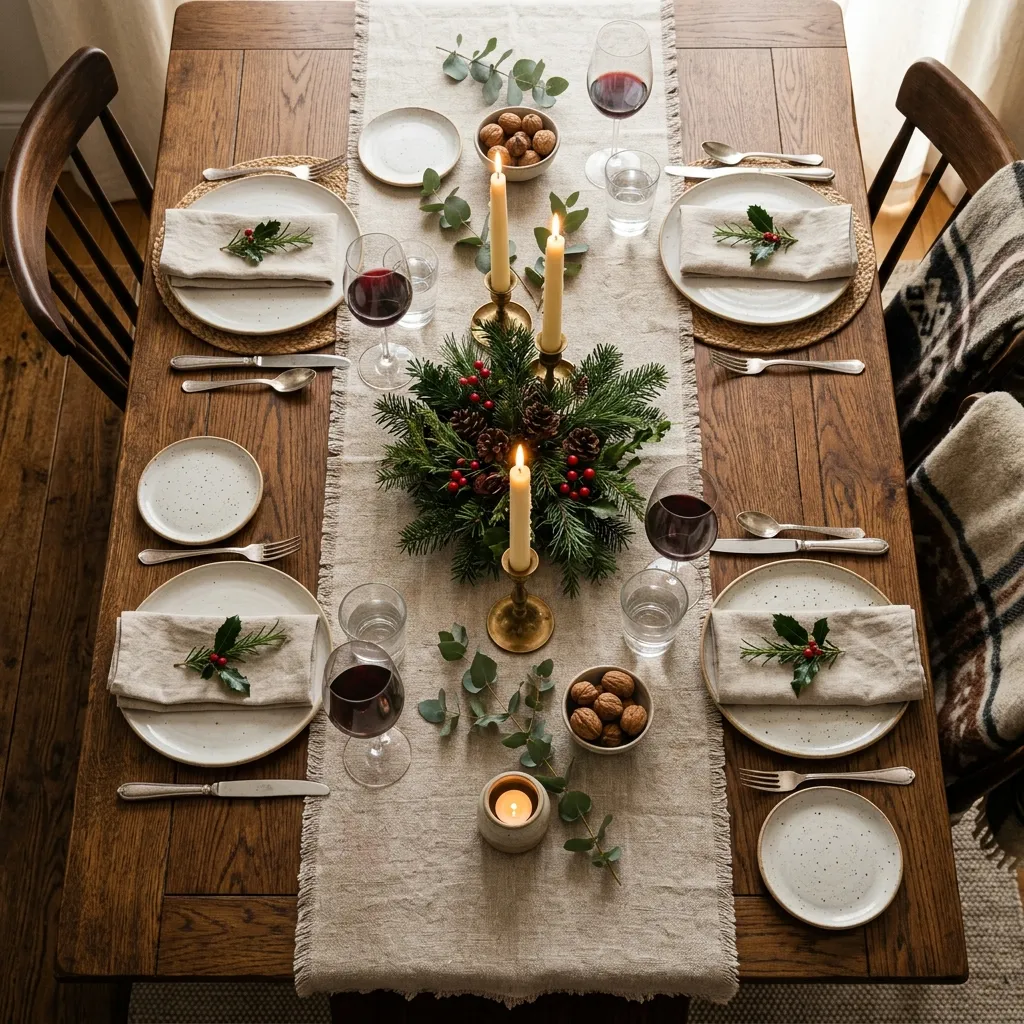
⏱️ Table Runners: Core Specifications
- Difficulty: Beginner
- Time Required: 45-60 minutes
- Core Tool: Sewing machine, iron, rotary cutter, acrylic ruler
- Key Benefit: Reversible design gives you two distinct seasonal looks in a single runner.
Hosting family dinners and holiday gatherings is a staple of US home culture. A beautiful dining table setup starts with a great foundation: the table runner. Instead of spending money on store-bought linens that might not fit your table's exact dimensions, you can easily sew a custom, double-sided runner in less than an hour. Reversible table runners give you two styling options in a single project, making them easy to swap out as seasons change. It is also an excellent stash-buster project for using up leftover fabric cuts.
Determining Your Runner's Dimensions
Standard table runners are typically 14 to 18 inches wide. The length depends on how much drape you prefer. A classic look is to have the runner hang 6 to 12 inches off each end of the table. Measure your table length, add 12 to 24 inches for the overhang, and add 1 inch for seam allowances. Write down your dimensions carefully before heading to the fabric store.
Selecting Coordinating Prints and Fabrics
Because this project is reversible, you can choose two contrasting or coordinating fabrics. For autumn and Thanksgiving, consider matching a rustic burlap or plaid pattern on one side with a solid linen on the other. For Christmas, a metallic holiday print on one side and a classic evergreen pattern on the back gives you two designs in one. Ensure both fabrics have similar washing instructions so they don't shrink unevenly when laundered. Medium-weight cotton, linen, or duck cloth work best because they lie flat without buckling.
Step-by-Step Sewing Guide
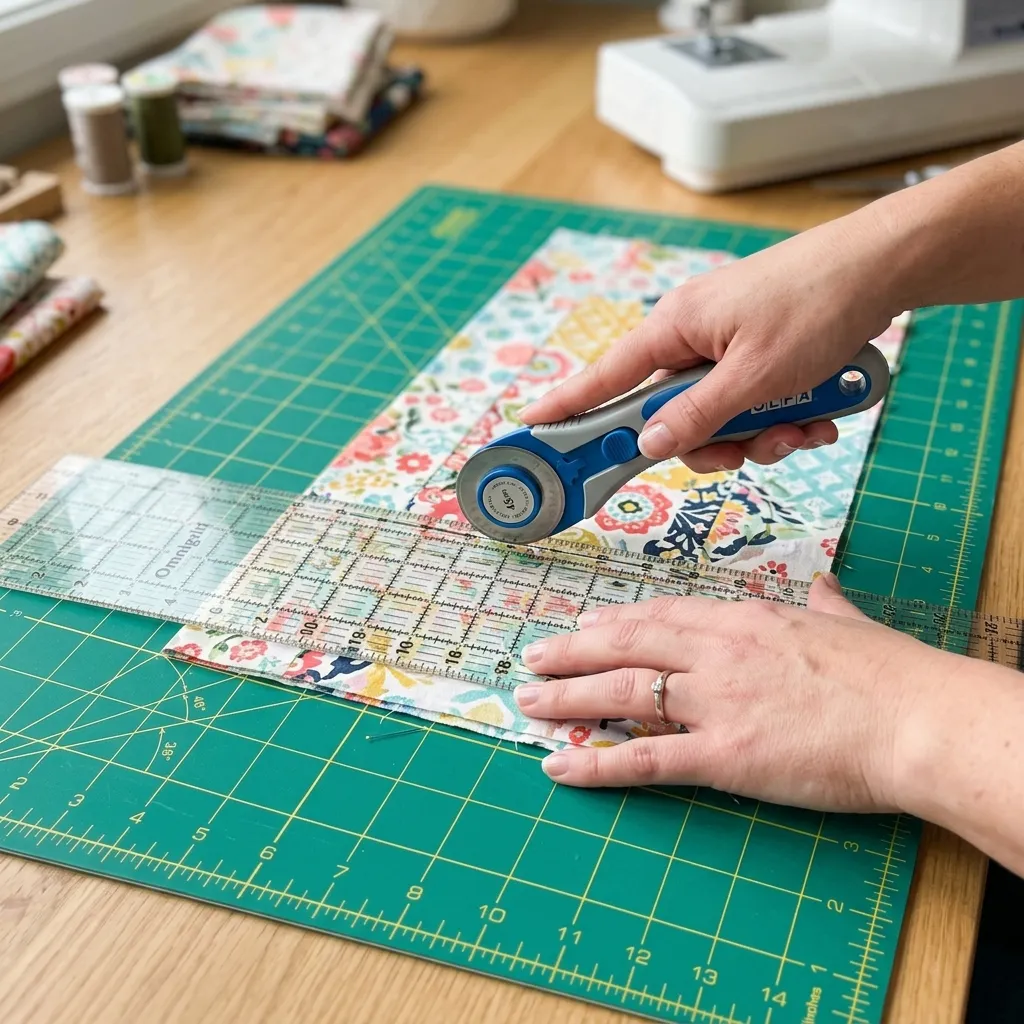
- Cut the Pieces: Cut one strip from fabric A and one strip from fabric B to your measured dimensions (e.g., 15" x 81"). A rotary cutter and a long acrylic ruler on a cutting mat make this process much faster and ensure straight edges.
- Pin Together: Place the two strips right sides together, aligning the long and short edges perfectly. Pin along all four edges.
- Stitch the Border: Sew around the entire perimeter with a 1/2-inch seam allowance. Leave a 4-inch gap open on one of the long sides for turning. Backstitch at the start and end of the gap to secure the stitches.
- Trim and Turn: Clip the corners diagonally close to the stitches to reduce bulk. Turn the runner right-side out through the gap. Use a dull pencil, chopsticks, or a knitting needle to push the corners out so they are sharp and square.
- Press and Topstitch: Fold the raw edges of the opening inside so they align with the rest of the seam. Press the entire runner flat with an iron. Topstitch 1/8-inch away from the edge all the way around, which will automatically close the opening gap and give a professional, crisp finish.
"To prevent your table runner from slipping on polished wood tables, you can insert a thin layer of cotton batting or flannel between the two fabric panels before sewing. This adds weight and a protective layer."
Creative Variations to Try
If you want to customize your table runner further, try these design modifications:
- Pointed Ends: Instead of cutting simple rectangles, fold the short ends in half and cut them at a 45-degree angle to create points. You can hang tassels or decorative buttons from the pointed ends.
- Quilted Runner: Add a layer of batting and sew diagonal lines across the runner to create a quilted texture. This is perfect for cozy winter themes.
- Stenciled Linen: Use fabric paint and stencils to add custom holiday words or silhouettes along the borders of a plain linen runner.
Conclusion and Holiday Table Styling
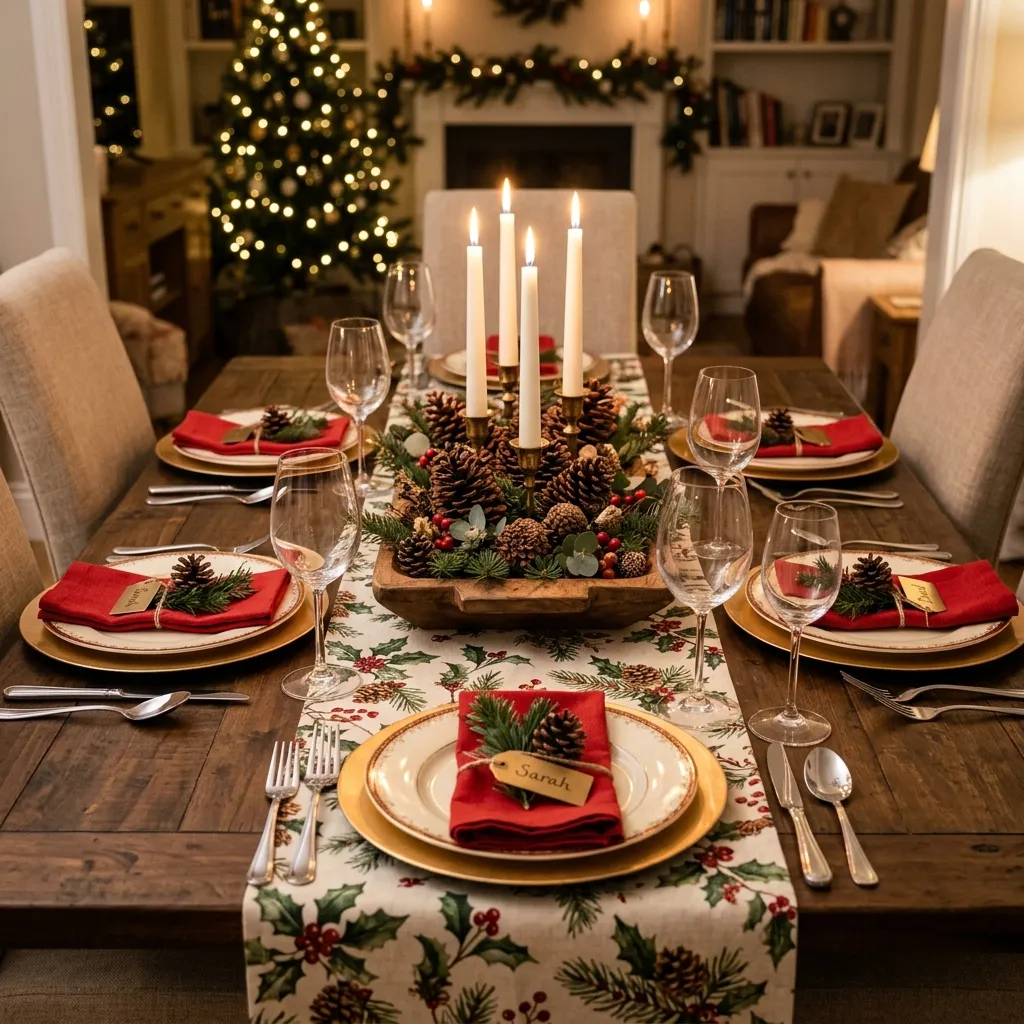
A handmade table runner makes your dining room feel warm and inviting. To style it, place a low centerpiece in the middle (like a wooden box filled with pinecones, eucalyptus, or candles) so guests can converse across the table easily. Layer the runner over a solid-colored tablecloth for a more formal look, or place it directly on bare wood for a rustic, modern farmhouse aesthetic. Best of all, it is incredibly easy to wash, fold, and store, making it a highly practical addition to your home decor collection.
Frequently Asked Questions
How do I clean my handmade table runner?
If you used cotton or linen, you can wash the runner in cold water on a gentle cycle. Hang it to dry to prevent shrinkage, and press it with a hot steam iron to remove wrinkles before placing it back on your table.
What is the standard width for a table runner?
Most table runners are 14 inches wide, which covers about one-third of the width of a standard dining table. You can make it wider (up to 18 inches) for very wide tables, or narrower (10-12 inches) for console tables or buffets.